
BlogFind out the latest news about Ketian and our industry
2026-11-08
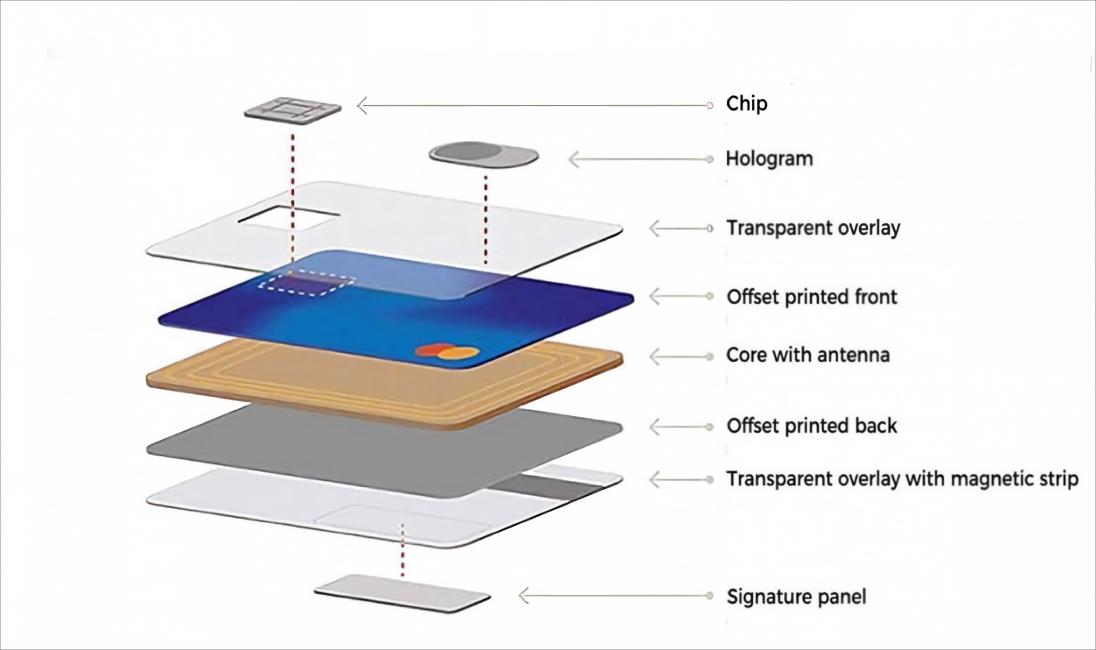
Smart cards (bank cards, transit cards, ID cards and more) are multi-layer cards made by heat-pressing different materials together. They include core base sheets, printed layers, clear protective films, chips, antennas, magnetic stripes, hologram security foils and signature panels.
Countries & areas: Malaysia, Thailand, Indonesia, Philippines, coastal UAE
Local conditions: Hot all year round. Inside closed cars under direct sun, temperatures can hit 65-70 °C. Relative humidity stays at 75%-85%. Coastal areas also have salty sea mist in the air.
1. Bubbles, layer separation and warping on PVC cards
Regular PVC softens at around 60 °C. When cards stay too hot for long, the core sheet, printed film and top protective film expand at different rates. This weakens the glue between layers. Bubbles appear on the card surface and the card bends or curls badly, making it unusable. This often happens when people leave cards on a car dashboard in sunlight.
2. Broken contact-less antenna and unstable RFID reading
The antenna for contact-less cards sits inside the card core. Heat makes PVC shrink and change shape. This pulls the metal antenna until it breaks. The card still looks fine, but the chip’s working frequency shifts. Tap-to-read distance becomes much shorter and the card stops working. Some city-transit projects report large-scale loss of reading sensitivity for regular-PVC contact-less cards only 3 months after roll-out. The root cause is heat-driven shape change of the base material.
3. Peeling print, sticky signature panel and magnetic-stripe damage from salty-wet air
Moisture slowly seeps through small gaps between card layers and breaks down the glue. Printed patterns lift and peel off. The signature panel on the back turns soft and sticky. Salt-rich coastal mist speeds up rust on magnetic-stripe metal coating and leads to read errors. PVC soaks up some water over time, so this hidden damage builds up little by little in high-humidity places.
4. Partial peeling of hologram security foil
High heat and humidity reduce how well the hologram foil sticks to the top protective film. Parts of the hologram lift or fall off, weakening the card’s anti-counterfeit function.
Countries & areas: Saudi Arabia, inland desert parts of the UAE
Local conditions: Extreme heat in summer; big temperature swings between day and night; very dry air; lots of sand and dust.
1. Thermal cycling fatigue cracking
Cards get very hot in daytime sun and cool down fast at night. PVC keeps expanding and shrinking over and over. Tiny cracks start to form along card edges and around the chip cut-out. These cracks grow deeper. In serious cases, the chip module becomes loose or falls out.
2. Material hardening and brittleness with age
Dry air plus strong sunlight makes softening additives inside PVC slowly leak out. The card becomes hard and brittle and can snap when slightly bent.
3. Surface damage from wind-blown sand abrasion
Constant rubbing from sand and dust scratches the clear protective surface and fades printed graphics. Dust particles also scratch the metal contacts of contact chips, leading to card-reading failures.
These failures in hot-climate regions show that improving production processes alone cannot guard against extreme environments. Choosing the right base material is our first line of defence to cut failure rates. Standard PVC has obvious weaknesses when exposed to high heat, salt mist and sand-dust. For overseas projects, we need to foresee environment-related failure risks and adjust material solutions accordingly.
Ketian supplies PVC, PETG, ABS, PC and RPVC card-base materials. Our products serve tropical markets such as India and Malaysia; desert-climate markets including Dubai and Iran; and cold-climate markets such as the United States, France and Russia. Years of real-world field tests and project use prove our materials stay stable and perform well under many kinds of extreme weather.
Work with Ketian Smart Card to bring more value to your products!




 CN

 Follow Us
 86-13823778249
 E-mail


